Sunday, 29 October 2017

Around the Balkans in 20 Days – Part 5


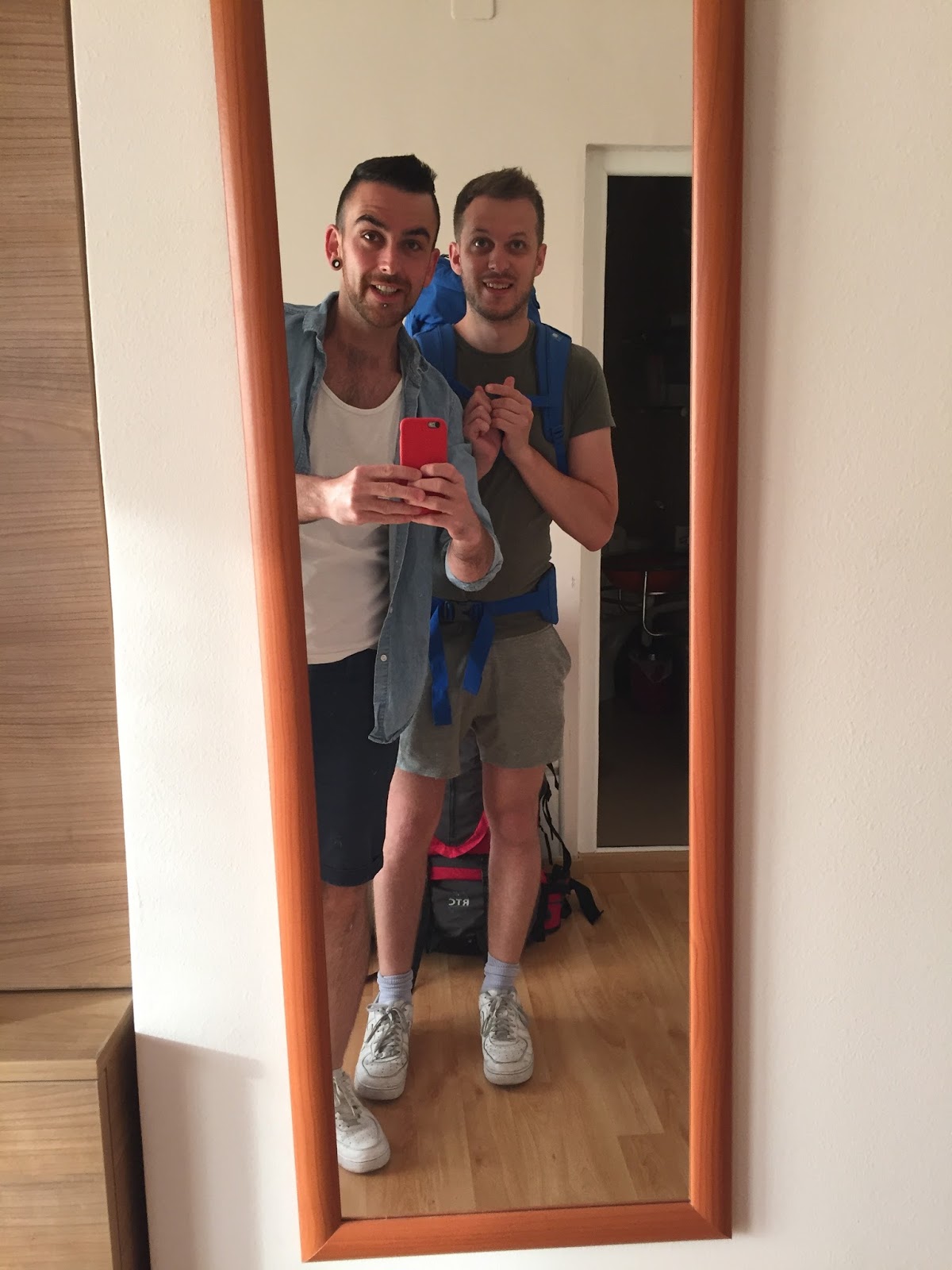
We had an early start today, as we began our trip to Macedonia’s northern neighbour. We packed our remaining belongings after getting ready, and did a last minute look around the apartment for anything left behind. We hauled our backpacks on, the heft of which was added to with the weight of the bottles of Tikves wine I wanted to take home with me. As instructed, we closed all the windows, turned the air con off and locked our apartment door, leaving the keys in the hallway before departing through the main door on to the stairwell. One last trip was had in the rickety lift, my nerves on edge in case the bottom fell through with said backpacks. Luckily we survived to the ground floor and made our way out the communal door and on to the main square. Even for 7am, it was suffocatingly hot. I hoped and prayed this bus had air con!

With the heat in mind, John suggested that we take a taxi to the bus station. I was a little relieved he did ask, although I feigned a little bit of opposition at first (as is my demeanour) before capitulating and agreeing.  I let John do the talking, to a driver parked adjacent to the Arc de Triomphe. He helped us with our backpacks, and soon drove us down the familiar 11th October Street. Smatterings of early risers were heading in the opposite direction to us, possibly to set up shop for the first day of weekend trading. Tracing the route we walked two days previous, we were at the train and bus station in no time.

After paying for our ride, we were met with the usual humdrum around a station, even at this hour. Bus engines where whirring in the background as we made our way into the departures hall to find information for our bus. Although the main boards were in Cyrillic, the front of the buses had English signs for their destinations. We spotted ours through the flimsy idea for a ticket gate, where a couple of small families had set up camp ahead of the driver opening the vehicle to let them on board. We had about 25 minutes, so we went to a kiosk in the hall to purchase some extra treats to add to our horde. We added sweets and crisps to our stash of water, sandwiches and beer – well, we were going to be on a bus for 8 hours!

We returned to the departure gate and showed our tickets to the clerk. Uninterested, he waved us both through, and over me moved to the front of our bus. We dumped our bags next to those of the waiting families. We were told two days ago when buying the tickets that a charge would be levied for the luggage, something we are not used to doing in the UK as the ticket price normally includes the luggage we bring. Not knowing how much this charge would be, I ordered John to take a stash of notes out so that we wouldn’t be one of those couples who searches for change and holds up a queue. I think John got out about £30 in Denar. When it came around to our boarding, the charge was a mere £2. Very reasonable, and set the bar for how much we would be paying on other bus journeys ahead.


We boarded a bus that was definitely a relic of the late 1980s/90s. Perhaps Communist apparatchiks rode in it themselves! Anyway, we placed ourselves on our dated purple and white moquette seats half way up the bus. My thinking was that the toilet would be located down the emergency exit stairwell opposite, so we would have ease of access. But as we unpacked our immediate travel necessities – headphones and the like – I noticed that there was no door either to the left or right, just the emergency door straight ahead to leave the bus. I turned around to see if there was a cubicle at the back of the bus. None existed. Shit.

So now I sat contemplating a bus ride for 8 hours without a toilet. Drinking beer was now out of the question. We didn’t know how many stops there were, where we were stopping, or even if the stops had toilet facilities. I was thinking how we would have to ration our water intake but balance it finely with our hydration needs, in order to reduce the need to go. John at this point darted out of the bus, departing in 10 minutes, to go for a last minute relief break. I ummed and ahed as to whether I should do the same, but decided my chance had now gone by the time John returned. I knew I would now be anxious for the entirety of the journey. The driver fired up the engine and the air con blew into action. So too did the Wi-Fi. Wouldn’t you believe it, no bog but there was high speed internet. Incredible!

The at-capacity bus reversed out of its bay, pulled forward through the barrier emerging from under the train platforms and on to the side street in the open air. We drove to the dual carriageway, and headed eastward. The sun was blazing through the windows, but we did have the use of curtains if we needed them. I quite enjoyed my window seat views as we swiftly passed from city suburbia to open country. The raised elevation of the road and coach meant I had a great view of the horizon. Our route would take us around the edge of the mountain range observed on Mount Vodno, which blocked our view to Serbia in the east two days ago. Now we would get to see what lay behind it. John made use of the Wi-Fi capabilities, which kept him entertained. We merged on to the E75, the road that connects Budapest to Thessaloniki and undergoing work for an additional east/west junction, to proceeded north.

We pulled off the motorway after 30 minutes or so of travelling, with Kumanovo being our first stop. I could only pass a fleeting judgment on the city, but I did notice that the ethnic divide was somewhat lesser here. The odd mosque and church didn’t seem to conform to a logic that a certain group lived in one part or another. The bus station was a mere parking lot with an aged administrative building near the entrance. A number of travellers left us, but they were equally replaced with new people boarding. We then set off towards the Serbian border.

I wanted to test out this Wi-Fi, so I decided to FaceTime my mum. I logged on to the Wi-Fi and called her. I had quite forgotten that it was very early in the morning in the UK, but nonetheless my mother was awake. It had been just over a week since we left for Berlin, and although I had messaged her and FaceTimed once, we chatted about the past couple of days. John’s head would bob in and out of the camera at prompts to the conversation I was engaged in, but only because he could hear just my side of it as I had my headphones in. After 5 minutes, we said our goodbyes.

We knew we were approaching the border because the driver’s aid (or the second driver!?) started walking up the bus and collecting an assortment of documentation, passports and ID cards etc. We gave him our passports with the visitation paper. He then waddled back to the front of the bus prior to our stopping and starting through the slow traffic to the Macedonian border control. John and I anticipated observing a mass of migrants at the border, or a sense of chaos following the refugee crisis in the previous months. But there were only a handful of people at this particular crossing. I suspect the initial influx of refugees had either made it to Serbia or they walked alongside the border to a more open spot to cross and continue their journey. As we waited, I saw that we were now indeed on the other side of the mountains guarding Skopje, and were situated in an open valley. As I was on the left-hand side of the bus, I could only see the western hillside where a settlement nestled halfway up on the Serbian side of the border. If you climbed up and over that hillside, you would be in Kosovo.

We passed through the Macedonian side with ease, and the guide handed back our passports but without our visitation paper. We then progressed to the Serbian checkpoint. We all had to get off the bus and individually hand in our passport to the guard in a toll-booth like structure in order to be stamped. The bus may have been checked by a guard or two, I was unsure, but 10 minutes or so later it pulled up alongside us for us all to get back on.

We wound our way along the motorway, pulling off every 50 kilometers or so to drop off/pick up passengers at small towns along the route. The landscape was still that of wide floodplain expanses, with the odd hill here and there, or in the distance. At one stop, John dashed off with a fistful of denars to go to the toilet. He exchanged words with the driver before getting off. I was anxious in case it was lost in translation that John said he would only be 5 minutes but the driver would instead drive off. I was also worried of the reverse that John would dawdle and be longer than 5 minutes and risk the ire of the driver, who may have chosen to depart anyway. Luckily neither happened, and John rushed back. His description of the toilet had me fear for my personal hygiene for when I would be my turn.

The one thing that struck me as we dipped in and out of these towns were the continuous EU signs on new buildings or projects. They must be spending a huge sum as part of the initial accession package ahead of EU membership. This juxtaposed with my earlier assumptions of Serbia having a dislike of anything EU related. It also just reminded me of the unfortunate situation we found ourselves in the UK, only weeks before. Thankfully, thus far, we had avoided any forlorn faces or sympathetic conversations from locals about our current quagmire.

But then my need for a rest break soon came about, in-between stops. So I had to concentrate on my need to hold it in, whilst wishing for a stop to be on the horizon. When it indeed came, I signalled to the driver before I leapt off with two fingers and mouthed “two minutes”. He nodded with a sense of further frustration at delaying his intended immediate departure. I really needed to use the full facilities of the £1 entry toilet block, but was aghast at the cleanliness and the furniture I found in the cubicle – a floor level basin. I had neither the time nor inclination to try and navigate this scenario. After doing as much as I could to ensure a comfortable onward journey, I jumped back on the bus and off we set.

The last stop before Belgrade was Nis. Located in central southern Serbia, this was its third city. And it seemed as though it was the forgotten city in that it needed a bit of tidying up. Buildings looked creaky, and the bus station seemed to look like an imitation, yet run-down, petrol station from the early 1980s. It did the job I suppose. John had to dip out for another toilet break, but here we had 10 minutes to stretch legs. I dashed to the toilet too.

Soon after we left the city, I started to nod off. I awoke about 40km outside of Belgrade, and the sleep meant I did not have to focus on my need for the loo. Outside, the bus meandered uphill through low, rolling green hills in weather that had now grown overcast. A steady stream of cars travelling alongside us soon grew in number as we approached the capital. We then came over the crest of a hill and started our descent into the city. The taller, modernist structures peered in-between the folds of the remaining hills obstructing our view, before the suburbs swept alongside us and our view of the burgeoning city was made clear. The motorway cut right through the southern part of the city, from east to west, and we departed at a main junction that sat next to the Sava River. We turned north into the city, running parallel to the railway tracks. The bus depot was adjacent to the railway station. We disembarked and collected our backpacks. There was little fanfare with our arrival, and our co-travellers seemed keen to go their different ways immediately. No hanging around!

Our new surrounds presented refurbished Austro-Hungarian architecture sat next to their patiently waiting neighbours. One building would be completely upgraded and finely pointed, and then the next would have its pastel coloured plaster partially missing and tired with pollution. The whole area was next to the Belgrade Riverside development, so was the natural next step for rehabilitation. We began to walk, crossing the main road in front of the station, to continue onward to Balkanska.

We walked past a two story covered car park, inside of which we noticed a gathering of about 70 or more men. It became apparent that these were all Syrian refugees. I mention men because there were no children or women present. None. They were huddled under the shade of the car park roof, amongst possessions that could be carried. So Belgrade was one of the centres the refugees congressed, waiting opposite the two methods of onward travel – train and bus.

We walked on and turned left up Balkanska. I recall the steep hill that this would become, and hated the idea of my backpack weighing me down. We plateaued next to the Hotel Moscow, and walked onwards to Trg Republika. We were early to check in, so we walked up Kneza Mihaila, the main shopping street, and sat down at a café to rest and quench our thirst. I opted for an elaborate Latte. We surveyed the scene and population. The street was bustling as shoppers and day-trippers leisurely went about their day. We were sat under a canopy with fans cooling us off. Where we were sat, at the top end of the pedestrianised shopping street, the buildings were low level copies of the pastel coloured ones near the station, some indicating dates of their construction. After a while, we returned to Trg Republika, and walked back downhill in the opposite direction into the Skadarlija. John appreciated a forgotten mode of transport that passed us by - a trolleybus.  I appreciated the breeze it gave off to cool me down.


The Skadarlija is a quarter adjacent to the popular Skadarska Street, which buzzes with restaurants and bohemian nightlife.  The cobbled street stretches from the Trg Republika at the top of the hill, down towards a green grocers market in the direction of the Danube. The end of the street, opposite the market, is marked with a Sebilj – a water fountain that was a gift of Sarajevo in 1989. The wider area seemed to be built pre-war, with raised one-storey houses resting next to tall four-storey apartment blocks formed on a grid basis. They were all constructed in the same dark grey stone and cement, with the unifying aesthetic of 1930’s modernism and the added flair of ornate stucco cornices every now and then; each with a touch of ageing decay.

A trolleybus whizzed by heading towards the town centre, as I made calls and sent messages on my phone to alert the homeowner that we were there. After 10 minutes, the cleaner for our apartment came down to let us in. She couldn’t speak English beyond the odd word or number. As we got into to our sizeable and modern apartment, on the top floor of a four-storey block, we had to use the aid of Google Translate. She hadn’t finished cleaning yet, so asked if we could come back in an hour. We left our bags and set off with a set of keys and left her to finish.

Although I had visited the foodie street before, I never really explored the quarter that would be our base for the next few days. I was excited to show John the confluence of the Sava and Danube rivers from the Kalemegdan. So we walked through the side streets northwest, admiring the buildings and appreciating the shade provided by the narrow streets and tall buildings. On one corner we noticed an Art Deco/modernist building that seemed to house a cultural centre now, but when built contained the First Danube Steam Navigation Society, evidence of Belgrade’s key shipping status in the past.


We continued towards the Kalemegdan, walking via the Student Park, and entered via the main entrance opposite the top of Kneza Mihaila. At first, you walk through a small forest of trees before it opens up to landscaped gardens with monuments of Serbian and Yugoslav history.  People peppered the gritty pathways and benches as we walked along, the odd person stooping into the flowing water taps for refreshment. We bared left so we could begin our 180-degree walk from the east to the northwest along the ramparts of the fortress. The Sava is the first of the two rivers we see, travelling east towards the city, before turning gradually north as it arrives below us from the left. It then passes by towards the island created at the initial joining of the Sava and Danube, which was the furthest north we could see at present. Bridges heaving with traffic crossed over to New Belgrade with its brutalist architecture, hovering in the distance beyond the park opposite us. The old city loomed on our left, clinging on to the hilly riverside above the train station and beyond.

We turned right following the Sava northward along a slim boulevard towards the Danube. The fortress over the years had been expanded, and the terracotta/stone bricked walls we were walking alongside belonged to the 19th century. We walked through an entry gate and climbed up to the older fortress plaza area belonging to the Ottoman period. We were now opposite the island and could fully take in the awesome view and power of the Danube swallowing the water of the Sava as it travelled eastward. In front of us now, to the north, a wall of forests guarded the Vojvodina, and in past times would have been the Military Frontier to the Austro-Hungarian Empire beyond. We decided to return to the apartment, so that we could recharge our batteries (technological and biological) and change for an evening meal.

I had chilled a bottle of the white wine we packed in Skopje, and John had done the same with the beer intended for the bus journey. We drank these as we changed, then settled down for while to play cards and trawl through social media to look for any gay nightlife. We found a Facebook page of a night that was located a mere 500 meters away. Google couldn’t locate it specifically, but we decided to give it a shot anyway. After getting rather merry whilst doing all this, we decided to head out and eat on the Skadarska.

Within 5 minutes we were there, so we walked up and down the cobbled street, looking at menus and agreeing at how reasonably priced it all seemed given the posh appearance of the restaurants. We decided on Dva Jelena – Two Deers. We had bread upon arrival and ordered a bottle of white. Our mains were rich and flavoursome, thankfully soaking up the equivalent of a bottle of wine we drank each by the dinners end. As we settled the bill of around £20, it was approaching midnight. We decided that rather than go to a bar for another, we would try and locate this club.

According to Google and other notable mapping websites, the building number for the club on this street did not exist. So we decided to trust street signs and instinct. We got to Dunavska and looked for the number, but we could only find a building that was two numbers before it, which ended at a crossroads.  In the low-lit street lighting characteristic of Europe, we were anxious not to be looking for a gay venue, in case haters were waiting for prey. So we circled a block of buildings to see if we could find a hidden set of numbers to mask the real location of the venue. We even tried to listen for the bass thumping sounds of music to guide us, but nothing gave away its location. We returned to the crossroads.

It was then that we spotted three men who we decided were heading for the club too. We hung around for 30 seconds so they were a good 200 meters ahead before following them. They took the road off the crossroads that was lined with wired fences separating the road from grassed over ex-industrial land, was hardly lit, and seemed to head towards an industrial park. Things became worrying when we had to cross a railway line. Relief came over us as we began to hear those bassy sounds. As we turned the corner of a building that reminded me more of a guardhouse, I noticed a police van parked across the way. Three people were on the door to the club, one in semi drag, and began to speak to us in Serbian as we went over. We gave our apologies and they then asked in English if we knew that this was a gay club. We said yes and smiled, showing our relief. They explain the cover charge and that it included two drinks tickets. Bargain! The officers in the police van seemed unperturbed.

Whether because the LGBT scene was rather small, or this was a place for regulars, or that we simply entered; a number of heads turned as we entered into the inner open-air courtyard of the club. A bar was opposite us, so we passed groups of friends as I ordered our first free drinks while John popped to the toilet. The Facebook group mentioned that three styles of music would be played, but we couldn’t see enough space for there to be three separate rooms. It later transpired that three DJs with different tastes of music played at varying times during the evening in the sole club space inside.


After finishing our first free drink, John grabbed the next as I set off for the loo. The interior was a small concrete bunker with graffiti and posters from events gone by plastered all over the place. It would be at home in east London. Upon my return John got speaking to two people, soon to be joined by a third. Nemanja was local to Belgrade and his friend Danilo was visiting family nearby and hailed from Dusseldorf. Voja, who joined us later, also lived in Belgrade. We got chatting about a whole host of things whilst in the courtyard, as the placed filled up even more. I asked about the police outside. Nemanja said that they were there to protect us, not intimidate us. This put my mind at rest. We stuck with these guys and exchanged numbers to potentially meet again while we were here. After a number of Vodka Cokes, we all went indoors for the pop music DJ set. My last memory was calling out at the top of my lungs, along with Voja, for Cher to be played. Not sure if the DJ obeyed.

Friday, 6 October 2017

Social Democracy in Post-Communist States (3/5)

Defining Social Democracy

Social democracy in its present form is the result of over hundred and fifty years of evolution, and breaks from its Marxist origins. Its ties to Marxism were broken after the October Revolution in 1917 in Russia because socialists disagreed on the means to reach socialism. There were those who sided with the revolutionary socialists in the ilk of the October Revolution, and there were those who preferred the democratic means to achieve similar goals. After this split, the former began to call themselves ‘communist’ whereas the latter became known as ‘democratic socialists’. This further evolved to become social democracy, as we know today (Andrew Heywood, and Bruno Coppieters and Kris Deschouwer).  Andrew Heywood states that ‘The social democratic tradition has therefore come to stand for a broad balance between the market economy on the one hand, and state intervention on the other.’ Although this is a theoretical development of social democracy, I seek to work with the definition of social democracy, advocated by Bruno Coppieters and Kris Deschouwer, in its practice as a social movement, an ideology and a type of society. I will focus specifically on the first two criteria.

The social movement is the unity of the wider, organised working class in political parties and trade unions. As a process it has its origins in the emergence of social cleavages as a result of the industrial revolution, and has developed and become institutionalised over the course of a hundred and fifty years advancing its causes slowly. However, this did not occur in the East. Reform was rapid and cleavages were blurry - hampered by other divisions, such as ethnicity, so as to weaken the movement. Ideologically, social democracy advocated a classless society like the communists, but this then altered after World War II to advocate an expansion of the welfare state within a liberal capitalist framework. Yet in the East, ‘socialism’ became discredited even when the ideological content was capitalist and populist. The transition saw a clash of principles where marketisation and economic liberalism rolled back the role of the state, especially in social welfare.   So social democracy developed into two different concepts between East and West based on its experiences of development, although they both face similar challenges today. These two defining features of social democracy will enable me to address its current form in Macedonia. Primarily, the point here is that one cannot directly or fairly compare the nature of social democracy in the East with that of the West.

The Socialist International experienced this problem of definition after the collapse of communism, when admitting members to the social democratic family. This is because the fluidity of the transition hasn’t harboured an environment to make lasting decisions, the concept of ‘left’ is defined differently in the East in ideological/policy terms, the differences between new and successor social democrats within a state make a decision difficult as to the trajectory of the party in the future, as well as a general inability by the populations to differentiate between revolutionary and democratic socialism. Hence a decision upon successor parties is based on the way they have structurally changed. This is evident in who these parties appeal to for support, the composition of their membership, and an experience of internal ideological splits due to democratisation. But the effects of these could lead to nationalist tendencies, the emergence of a small social democratic group within the parties led by individuals who are younger, and a pull to a strong party centre to maintain unity. However one observation by Heinz Timmerman is that successor parties retained a conservative approach to the economy during transition, albeit this may have altered since. Therefore, ‘social democratisation’ as a process of change within the successor parties can allow me to judge how far along this process the SDUM is at present.

Communist Successor Parties and their Legacies

Building on this issue of communist successor parties, as it is highly relevant given the SDUMs heritage, I look to arguments developed in Bozoki and Ishiyama’s ‘The Communist Successor Parties of Central and Eastern Europe’. In their opening chapter, they look at the transformation of political identities that these parties undertook during democratisation through the strategies they employed. The typology of four party positions comes from whether the party is still Marxist or not, and whether it is transmuted or not. Factors that impact on the strategy that is followed are either environmental or internal organisational. The former rests on the reaction a party has to certain stimuli such as election results or vying to dominate political space on the left from similar contenders. The latter, on the other hand, depends on whether the party is a mass or cadre party (as to whom can change its identity), the attitude of the former regime whilst in power, and events during the transition including the carry over of party personnel and internal ideological struggles. Therefore, Bozoki and Ishiyama write, ‘the evolution of the adaptation strategies of the successor parties can be seen as both the product of the interaction between political performance on the one hand and the internal organizational characteristics of the successor parties, on the other.’ These points will allow me to re-evaluate the party within the typology outlined to assess its current strategy.

Yet, it is the existence of legacies which allow me to return to the period prior to independence because ‘If epistemological criteria for causal explanation require a minimum of temporal causal depth, only institutions, structures, processes, and actions that antedate the “proximate” events of the transition qualify as the ultimate causal variables of regime change.’ (Herbert Kitschelt) Yet these legacies do not overcome exogenous ‘shocks’ and internal party maneuverings of ambitious politicians. Understanding the impact of legacies, in their variety, upon the party today helps to assess the extent to which the SDUM are hostages to their legacies, if at all. Kitschelt’s typology of predicting the strategies and organisations of communist successor parties starts his causal chain from the era around World War I. The variables include: the strength of precommunist political society, the professionalization of the state apparatus, whether it was a newly independent country seeking Western support, if the party strategy was programmatic or clientelistic, its ideological clarity, its electoral support, the ratio of members to voters and citizens, as well as the extent of internal party centralization. He describes Macedonia’s typology as ‘paternal communism’, a group marked different because of their association with independence movements.

The impact of legacies on the strategies of the Macedonian successor party show that because they emerged from dominant ethnic rulers, the regional leaders turned to independence, democratisation and reform. Because of weak precommunist political society and a weak state apparatus there was no mobilisation in opposition to communism, and the party was partial to promote clientelistic practices. This may have stymied the ideological renewal of the party. Yet a consociational form of governance possibly cut across these legacies because of internal ethnic divisions, external threats and international instability.

Those in the three-tiered hierarchy of the party may have felt the impact of legacies in the organization of the Macedonian successor party. The leaders (first tier) in newly independent states could expect support for politico-economic reform. The middle ranking bureaucracy (second tier) could lose out, so some may leave parties governed by reformists, as was the case in Macedonia. The members’ (third tier) incentives to remain would be reduced, but sentimental and clientelistic factors play a role in their staying.  The parties in newly independent states may lose members who lose out to reform and clientelist links, but nationalist-minded supporters will join. This was a consistency in membership during transition. The distribution of power within the organisation is also impacted by legacies because differences in political outlooks of the three tiers of the party may increase or decrease internal democracy. In Macedonia, centralisation has occurred, but wholesale purging of the old guard was avoided by a new membership intake. The link to trade unions is tenuous as they tended to be present in those industries that would lose out from reform, and thus proved problematic to parties who pursued economic liberalization such as Macedonia. But to what extent is this typology assigned to the Macedonian case still relevant today?

Friday, 25 August 2017

Around the Balkans in 20 Days – Part 4

Our last full day in Skopje, and we had our sights set on leaving the city limits. Following our prompt to the taxi driver yesterday, her enthusiasm for Matkasee drove us to wanting to visit even more. So we followed our usual morning routine, including packing a lunch, and left the apartment, heading for the Ramstore. Another still and warm day, ideal for an outdoorsy day within a ravine and amongst the forest.

We dipped in to the supermarket at the Ramstore and bought plenty of water. We didn’t know how long our trek would be, so wanted to be armed with enough liquid to see us through. Now, instead of calling the chirpy taxi driver from yesterday, we decided to go rogue and just call at the taxi rank. After a minute or two of standing on the opposite side of the road to the taxi rank, with faint hope of eyeing up a suitable driver that agreed with us (and that those who didn’t would have picked up custom and moved on), we inevitable had to get in the New York style cab of a guy who was there two minutes previous. I’m sure he was baffled by our indecision!

We communicated effectively enough for him to know that we wanted to go to the Matkasee, so off we sped. The air con was a godsend, filtering us with its chilling breeze as the sun shone forcefully through the untinted windows. We coasted along the main route west out of town, lined with 1960’s, post-earthquake brutalist constructions, and over the Vardar. Once over, we followed a road that ended at a junction. To the right was the main route eastward, north and around the city, to the left the road headed towards Tetovo. We turned left and ran parallel to small parades of shops on either side of the avenue. The suburb we entered was definitely distinct from the city centre. It was a lot more of a suburb, every road leading off the avenue leading to low-rise brutalist residential accommodation. I know this because we had to detour through the side streets as the main avenue was dug up for resurfacing. As we passed through, the sanguine effect of the sun was ever present on the residents. Lackadaisically, they ambled around, perhaps from a household chore or to the shops. It was the summer after all, and the temperature was rising.

As we skirted through the suburbs, we stopped off at a petrol station so the up-til-then silent driver could fill up the tank. Swiftly back on the road, and no sooner that we were back on the main avenue, we turned left down what I would call a country road. This was our route to Matkasee, off the beaten track. Originally, I had hoped we could have taken the bus, and that would have been cheaper and a rather more real experience. However, the further away from the city we travelled, the lesser the confidence grew in me as we entered unchartered waters. I was glad of a local to guide us through.

We entered a village called Saraj, the first that was evidently Albanian. This was the first time I had seen the Albanian flag being flown in what seemed a more official capacity. The village itself stretched about half a mile or so. It obviously suffered from a lack of investment. The road was bumpy, there were pavements for all of about 400 meters of the village, a bus stop that was basically a pole in the ground, and a public building that was either run down or was never completed. You could feel the resentment, and I would too, from the lack of attention from the Government. And this from a Government that had an ethnic Albanian party as its coalition partners. Romantically, I became fond of it as we travelled through. Once Saraj passed by, we drove along a flat, country road then started going up hill and into another even smaller village. This one was more tightly knit architecturally as the road whisked past the edges of peoples houses and near to their front doors. We finished climbing as we approached a small river, heading upstream as we were. We then entered a flatter floodplain, the road and river snaking along side each other. Part of the river was now more man-made, with kayaking facilities clearly visible, but also a gathering of individuals and families bathing and sloshing around in the river. We carried on.

We scaled another small hill and before us appeared the hydroelectric dam. Signs warned not to take pictures. I couldn’t fathom what the state secret could have been! As the dam disappeared behind us, we came to a halt. Our mute driver soon explained that we should walk 500 yards or so and that would be where our trail would begin. We paid him our rather cheap £9 for a 40-minute taxi ride, and walked up a narrow path into the mouth of the ravine. A couple of groups passed us walking in the opposite direction as we weaved along a narrow path that sheltered under hanging cliffs – a momentary respite from the sun.

As we turned a corner, we opened up from a bottleneck into an open expanse. To our right, the continuing path reached a canopied bar terrace and long stone building. In the centre was a turquoise green lake that stretched on ahead. To our left were what looked like scar-damaged, chalky white-gray cliffs that rose out from the lake like pyramids to the crystal-blue sky. As we approached the canopied area, it appeared the long building was a bar and restaurant. Before reaching there and ordering a drink, we noticed that we could hire kayaks to go up the lake.  A few visitors were ambling into them as we walked on, others beginning their voyage. We decided over our beer and cola to hire a kayak from the end of the trail, so that we could return in style after visiting some caves. There was a nice mix of people there – families, couples, groups of lads, tourists – but mostly locals of Albanian background, which cheered me immensely.


After our drink we decided to set off. I used the wifi to try and map our walk but, with little satellite mapping, only a limited amount could be done. After we passed the restaurant there was a large sign for walkers. Mostly in Cyrillic, but accompanied by pictures. The one that shone out for me was of a snake. Bloody SNAKES! Poisonous or not, I didn’t care. Their slithery bodies would freak the hell out of me anyway. Included in this collage were the flora and fauna of the canyon, as well as lizards. Surely I could deal with them. So our walk began with my heart rate at a rather higher pace than anticipated.


My movements through the rocky and dusty path were commando-esque. I flinched at any sound I heard, and recoiled at any movement that emanated from the steep hillside or rock face to our right. The only promising escape at times was a 50-foot drop into the lake. John just giggled most of the way at my paranoia and hysteria. The start of the walk was beautiful, the water twinkling in the sun, and the historic cliff faces showcasing scars from an age gone by. Kayakers paddled on by, with the odd accompaniment of a diesel powered boat chugging through. The first lizard really did make me jump. It was the more the realisation that it was there that scared me, not that it could do anything to me. On the contrary, it merely scarpered as it saw me. We continued.


After 30 minutes or so we started to question where the end was. After 45 minutes, we did so even more. After an hour, we asked people coming back the other way if the end was near. In patchy and unclear English, they said “Yes, not far” and pointed ahead. Thrilled that the end was near, we walked on with more of a spring in our step. 20 minutes later we reached the end - a green barrier, and a path that evaporated into the ether. An exhausted and exasperated look crossed our faces, similar to Wily Coyote when he fails to catch Roadrunner and the anvil lands on his head instead.  After holding our toilet break for over an hour, we climbed a few yards into the lizardy mountain and relieved ourselves. We could both see and hear the boats mooring nearby for the promised caves, on the opposite side of the canyon. No bridge or boat to connect us, and no boats for us to hire to take us downstream.  So now my thoughts turned to those wretched snakes, almost as if they had planned this trek, leading me to a dead end so that they could haunt me further on my return to sanctuary. My initial relief at reaching the end of the walking element of our exploration now turned into an even more insufferable return to a tortured path littered with imaginary snakes. As usual on a return journey, it seemed shorter. And so, I celebrated my return with a drink or two, John paying for a couple of rounds of beers to relive my stress.


Whilst there, and with access to wifi, I decided to FaceTime Michelle from the lakeside. A drunken call for 20 minutes went by in a blur. Back I went – now onto cocktails. 20-something Albanian lads occupied a rock jutting out into the lake partaking in camaraderie and diving into the lake. It then dawned upon me that I had no cash, and John had just spent his last on the drinks. No kayaking for us, although we had enough for the planned bus we planned to take back to Skopje.

So we departed, I slightly annoyed that we couldn’t go kayaking, but relieved that the organiser in me knew we had scant information on when and where to get the bus back to Skopje. We walked back where the taxi dropped us off earlier in tandem with other visitors now heading back home. We walked down towards the man-made kayaking facility as no bus stop seemed evident up to that point. A little further on, a busy car park was emptying slowly – cars doing u-turns and queuing whilst spitting up dust from the chalky road. We carried on past a couple of buildings, one housing a pedestrian bridge to the other side of the river, and onwards to a restaurant placed opposite an exposed, wooden hut. This may be our bus stop, as there were a couple of people there who looked like tourists. I persuaded John to go to the restaurant to double check. The waiter confirmed this.

It was getting late in the day, deceptively so as the sun was ‘setting’ behind the hills to the west. After 30 minutes or so, 4 young lads came to join the small but growing contingent in the wooden shack. After overhearing their conversation, we knew they were British. At a guess, they were 19 or 20. One asked if this was the bus stop, and John replied yes. This opened up conversation starting with the Matkasee and led on to our travelling plans. It seems that they were heading from Skopje to Belgrade by night train, then Berlin via Budapest, and onwards to Amsterdam. John and I affectionately called them the ‘In-betweeners’. They had the same characters in each of them – Briefcase, English ‘lad’, the dopey one, and average one obsessed with Carly. After 20 minutes a clapped-out old bus with no passengers onboard came from the direction of Saraj and passed us. In the immediate confusion of whether the bus stop was actually back up the road, one of the In-betweeners went off to explore just beyond the bend where the pedestrian bridge was. He came back and said that it was attempting to turn around.

A taxi soon passed by with the driver offering anyone a lift to Skopje for about £14. We declined and said that we would wait for the bus, to which he replied that it was broken down. We didn’t want this potential ruse to lure us into paying over the odds, so we declined again. No one else took up the offer. The In-betweeners were relying on the bus, as they hadn’t brought enough cash for a taxi. Our conversation with them soon drifted. After another 25 minutes of waiting, John unilaterally decided to take the next taxi – we could get cash on the way.

One passed by soon enough and John leapt into it, no doubt getting tired and restless. The taxi was metered and the driver suggested the fare would be about £12. We just nodded and off he drove. As we coasted along towards Saraj, we had hit upon a turned over truck in the road with a set of tyre marks veering off to the right. A black, expensive car was at the end of these marks, down a steep embankment. Clearly the car was trying to overtake the lorry but must have misjudged and ended up on a sort of car park area below. We skirted around the chaos, with the driver expelling grunts of disapproval. We sped on through the village and onwards to the main boulevard. As we merged onto a roundabout, a car to our left veered on to our lane and clipped the taxi. A near miss that sent our driver off on another tirade of grunts. We just wanted to get back, undamaged preferably.

A shattered John asked the driver to pull up at an ATM near the police station we registered at. He came back with a wad of cash, happy to be able to pay for the easier journey home. However, he got ten times as much cash out as needed. Instead of 10,000 denars he got 100,000 - £100. His tiredness was clearly showing. He found an exchange office and changed the rest into Serbian dinars ready for our bus journey north.


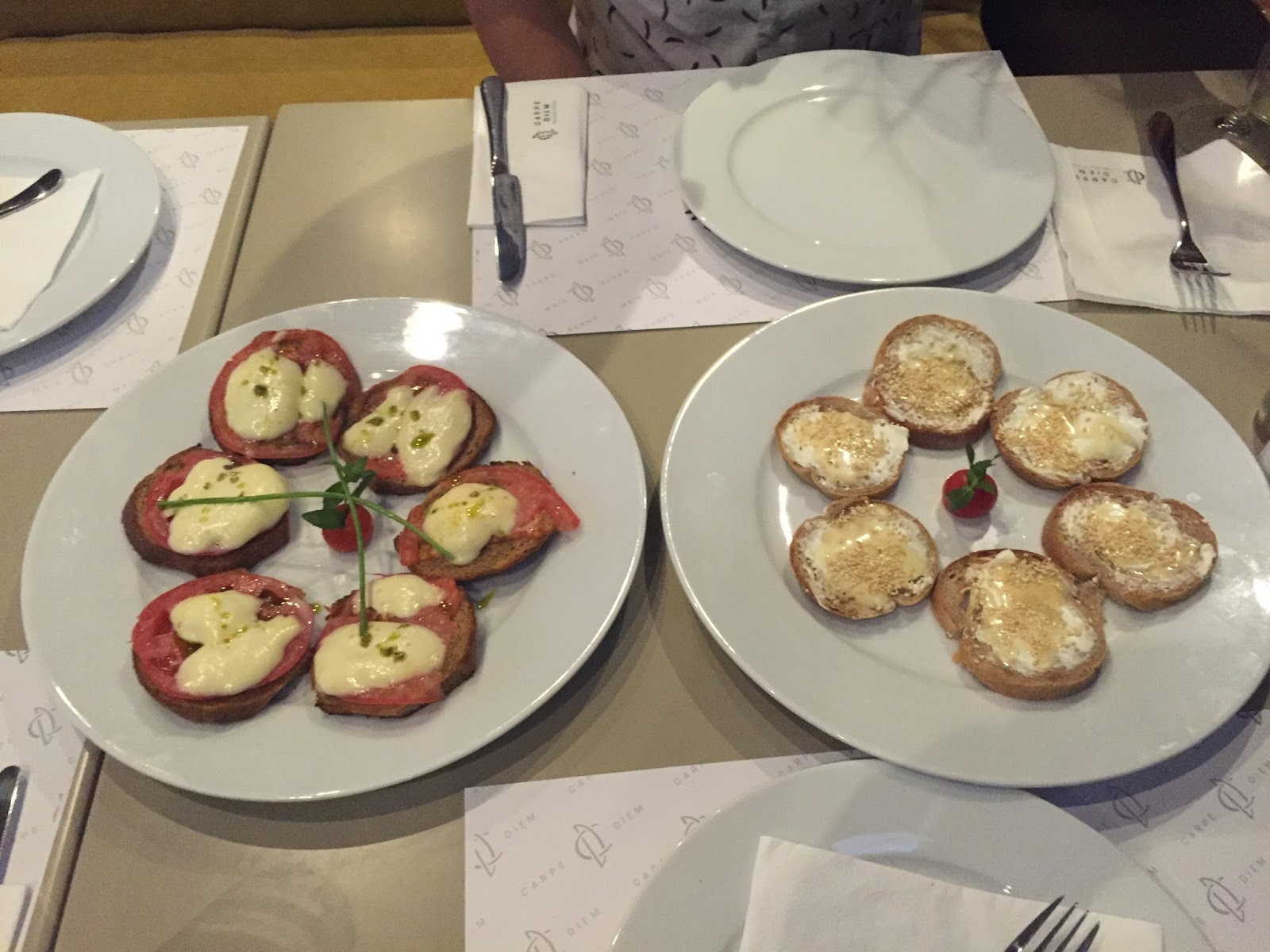
We headed back to the apartment, where we showered, changed and undertook some preliminary packing of our belongings. We had our last drink on the balcony as the sun was setting before returning to the police station. We had the police officer complete our small registration form to say that we were exiting the country in the morning, and he signed this off in his official book. We then returned to the main square and onward to Carpe Diem again for food. The halloumi with honey and sesame seed starter was to die for. As we had to get up very early, we finished up our food and wine and decided to get as much sleep as possible ahead of our mammoth trek tomorrow.

Friday, 2 June 2017

Around the Balkans in 20 Days – Part 3

We decided to have breakfast in the apartment this morning, no doubt because of the effect our vodka and wine induced evening had on our reluctance to venture outside so early and in such searing heat. So coffee and (non fresh) chocolate croissants it was, before showering and packing for the day. Today the sky was pristine – not a cloud. Hence we packed sun cream, factor 50 naturally, and lots of water. We also packed ham and bread so that we could have a picnic later in the day. But first we had a task to complete.


We left the apartment, on to the main square, and then turned right aiming for the naff Arc de Triomphe replica. The only saving grace in my eyes were the remnants of the colourful revolution, etched on to the monument as a reminder of another triumph the citizens were seeking to achieve. Onwards from this the 11th October Street merged with a road from the right, its name a symbol of the start of the Partisan resistance in 1941 commemorated by the Communists. And as we walked on, symbolism from the current era was evident everywhere. To our left was a park, adjacent to the brutalist mall, which contained almost a graveyard of religious, cultural, and event-marking structures. The first to appear involved Greco-Roman men linked arm in arm, with the world being held behind them. The dates and list of names pointed towards this being a memorial to the Macedonian security services that were killed during a low level insurrection in 2001. Initially a localized skirmish, involving a transfer of land between Macedonia and what was then Serbia, escalated into an ethnic conflict. No Albanian names could be seen.

A peppering of statues that had no explicit symbolic reference led us to the end of the park. Here, a latterly installed statue heralded the first meeting of the Macedonian ASNOM in 1944 – the Anti-fascist council that was led by Tito prior to the war’s end. Kiro Gligorov, the first post independence President of Macedonia, sits prominently at the table whilst a comrade speaks from the lectern. The Government seemingly had to mix it up a bit with a statue from the Communist past. It was noticeable that there was still no Albanian statue this side of the Vardar. Opposite the park stood the Macedonian unicameral Parliament. Even it didn’t escape the ‘make-over’ of the city, with tacky domes forced onto its wings and cream paneling covering its original terracotta marble effect facade. For fear of under doing it, another man on a horse was placed outside.


After our little tour of ‘Disneyland’ we walked on. Even after only leaving the apartment 10 minutes earlier, the heat was overpowering.  We took a left at the junction and walked back towards the river, turning right at another small modern shopping mall. We picked up a fellow traveler on the way – a stray dog. What was a cute addition for a few minutes soon turned into an annoyance we couldn’t shift. The dog became aggressive towards certain passersby and fellow stray dogs. I felt both lucky to have the dog ‘on our side’ but impatient for it to lose interest in us and wonder off. However it was with us all the way to the dilapidated rail and bus station. Built following the earthquake, there was a hubbub of activity at its entrance, consisting mainly of taxi drivers and food vendors chatting amicably whilst eyeing up potential custom. We walked straight in, past the row of bus company desks to our left and a waiting area to our right, through to the other side of the station. We could not find the train station area. Outside now, we turned left towards the road, then under the bridge that supported the rail platforms. We found a secretive side entrance into the dark and unwelcoming train station hall. No one was about, and only one desk was staffed. In English, I asked if there was a day train to Belgrade. We were informed that there was not, only a night train. I was really disappointed, as I wanted to see the countryside slowly pass by as we took our first train journey. We left the desk and considered our options. We decided to ask at the bus desk for times of departures and cost. They had a couple of ‘express’ buses that only departed at nighttime and took 6 hours, and other buses departing during the day that took around 8 hours. We decided against night travel so opted for one of the day buses. It cost the same amount we budgeted for the train, so we weren’t dipping into reserves. We paid for our tickets, and I left reassured that our transport to Belgrade was now confirmed.

With our task complete, we walked back to the Ramstore, our canine friend nowhere to be seen. Whilst walking over we agreed that our next visit should be the cross on top of Mount Vodno. I was eager to go following my aborted attempt the last time I visited. So at the Ramstore, we jumped into a taxi and made our way up the windy road to the cable car. Our taxi driver was a woman in her mid-50s. She spoke good but broken English and was very chatty during our drive. She explained to us, somewhat nostalgically, that when she was in school, they had a choice of languages to learn and she chose English as it was one of the most common ones. She was interested to hear that we planned on visiting Matkasee, so much so that she gave us her number so that she could take us there tomorrow. We took her business card as we departed and waved her off.

We walked along a path with a shop in a wooden hut and picnic benches dotted within the ascending forest to our left. John was very impressed with the free wifi available in such a remote place. Very ‘back to nature’ I thought. We walked on to a ticket booth and the lower station of the cable car. We paid our £4 fee and boarded our private pod. We slowly slid up the side of the mountain, and as the trees departed we could see the city below us. At first, it was the entirety of our view, but as we climbed the whole valley came into range. Villages that emerged on the horizon soon came to be viewed from a Birdseye perspective.  As we neared the top you could see the crescent shaped valley from east to west, with the mountains to the north our only obstacle to peering into Kosovo. We arrived at the summit and departed our pod. The Millennium Cross stood stoically ahead of us, and to its right a run down restaurant that seemed closed for refurbishment. We visited the small kiosk in its base to buy snacks, and then decamped on to a table to eat our picnic whilst soaking up the views.


The 360-degree panoramic view was truly awesome. The clear day meant you could even see Serbia over to the east, towards the end of the mountain range. To the west emerged a motorway out of the city, partly taking form as a lengthy viaduct heading towards Tetovo, the predominantly Albanian town. After our picnic, we had a wonder along the mountain ridge. There were open circular wooden huts dotted across the mountaintop, only about 5 or 6. One was occupied with an amorous young straight couple. We walked along to the furthest hut, then back again, and on to a run down building that had a plaque marking a German Command Bunker – prime spot if any. We saw a workman in his 70’s emerge from a nearby building site and walk down the hill and into the thick forest just below. We took a few more pictures and then decided to make our way back down, waiting to avoid another group so we had a pod to ourselves again.


We reached the lower station, and walked over to the car park. There were no waiting taxis so we decided to use our phones (without 3G) to descend the mountain via the forest. We saw a large map on a billboard next to a large hotel-like building just off the roadside as we left the car park, but the colour coding was undecipherable. We could see from Google Maps a track through the forest, so decided to go for it. As we got off to a false start, we noticed the workman from earlier. He was obviously heading home on foot. We saw him dip into a slender gap in the forest on the side of the road, so we decided to follow him. He could have been anyone, but we decided to trust the stranger rather than our own technology and sense. Though as we descended, we saw coloured markings on trees every so often. It finally twigged, about half way down, that three different colors direct you in three different ways. I believe we took the easy route. After 45 minutes of walking on a dry dirt track, we came across man made works embedded in the forest – some form of water drainage system for the mountain – then re-entered civilization with a farm or two, then houses with grand gardens.


We passed a shop as we walked down hill in the up-market, hillside neighbourhood and grabbed a couple of iced teas and extra water, before heading to a café I researched before arriving. The downside of Macedonia is that it has a terrible record on LGBT rights. There is one LGBT resource centre that in the past has been attacked on a number of occasions; and the Dutch Embassy has done a lot to support civil society to make the LGBT community more visible, acting as a symbol of hope. However, I managed to research somewhere that was LGBT ‘friendly’. It was west of the main square 10 minutes on foot, tucked in a cul-de-sac just off one of the main boulevards. It had a bohemian pop-up vibe about it. There was an entrance gap between high walls either side, and in the middle of the courtyard stood a large tree, in a rather parched pond, with wooden seating constructed over and around it. We were the only patrons. Our thirst not even quenched by the iced tea and water, such a hot day that it was, we asked the waitress for a drink and was suggested a local specialty. I accepted and was offered basically an iced tea. Oh well. We sat in the shade for about half an hour whilst we regained energy and hydrated. The café leant against a 4 story high residential block, where we got our free wifi from, and was sheltered under the tree and a tarpaulin canopy. Upon leaving, we noticed a military truck parked nearby and a few officers. My suspicions were roused – was this place being watched? Was it really an LGBT friendly place or a trap to lure us in? More realistically, it was probably parked at the back of a barracks. We crept back out on the boulevard, lest we became associated with the ‘friendly’ venue.

The sun was starting to lower in the sky, so that the larger buildings were providing much appreciated shade from the heat every so often. After a long and busy day, we returned to the apartment for a snooze and refresh. By around 9pm, we woke up, got showered and changed again, then sat on the balcony drinking some red wine, recanting our day thus far and plans for tomorrow, whilst simultaneously observing the hubbub below. The screaming lady returned once more. After draining much of the bottle, we had to remind ourselves that we were intending to go out, so we locked up and went down to the Square. Tonight we decided to go to one of the restaurants along the riverside. The bridge looked amazing lit up in the night, with the byzantine museum and theatre looming grandiosely behind. Again, the square was busy with families and couples. We walked by the restaurants, checking out their menus, until we decided on a place that looked quite classy called ‘Carpe Diem’. We sat in the canopied section outside, eager again to observe Skopjians going about their evening. We had a full, three-course meal (John may have skipped the dessert), and two bottles of Tikves Alexandria white wine. The total bill, with tip, came to around £20. Half of that was the wine! We finished off the second bottle slowly, before setting off for the café we visited earlier in the day.


The cul-de-sac looked a lot more sinister in the darkness, but as we ventured in our eyes adjusted to the darkness that was only lightly dusted with moonlight from up above. We crept in to the courtyard, half expecting the atmosphere to be a bit livelier for an evening, so were disappointed to see only a handful of patrons. We sat towards the main building at the back - in a corner and opposite another couple 10 feet away. Our order for beer spoken in English piqued the curiosity of the other patrons, but that soon abated. Over the course of two beers, we either discussed plans for the rest of the holiday or fell into a relaxed silence, observing others in the vicinity. By 1am we grew tired again, so paid our bill and departed back to the apartment.